

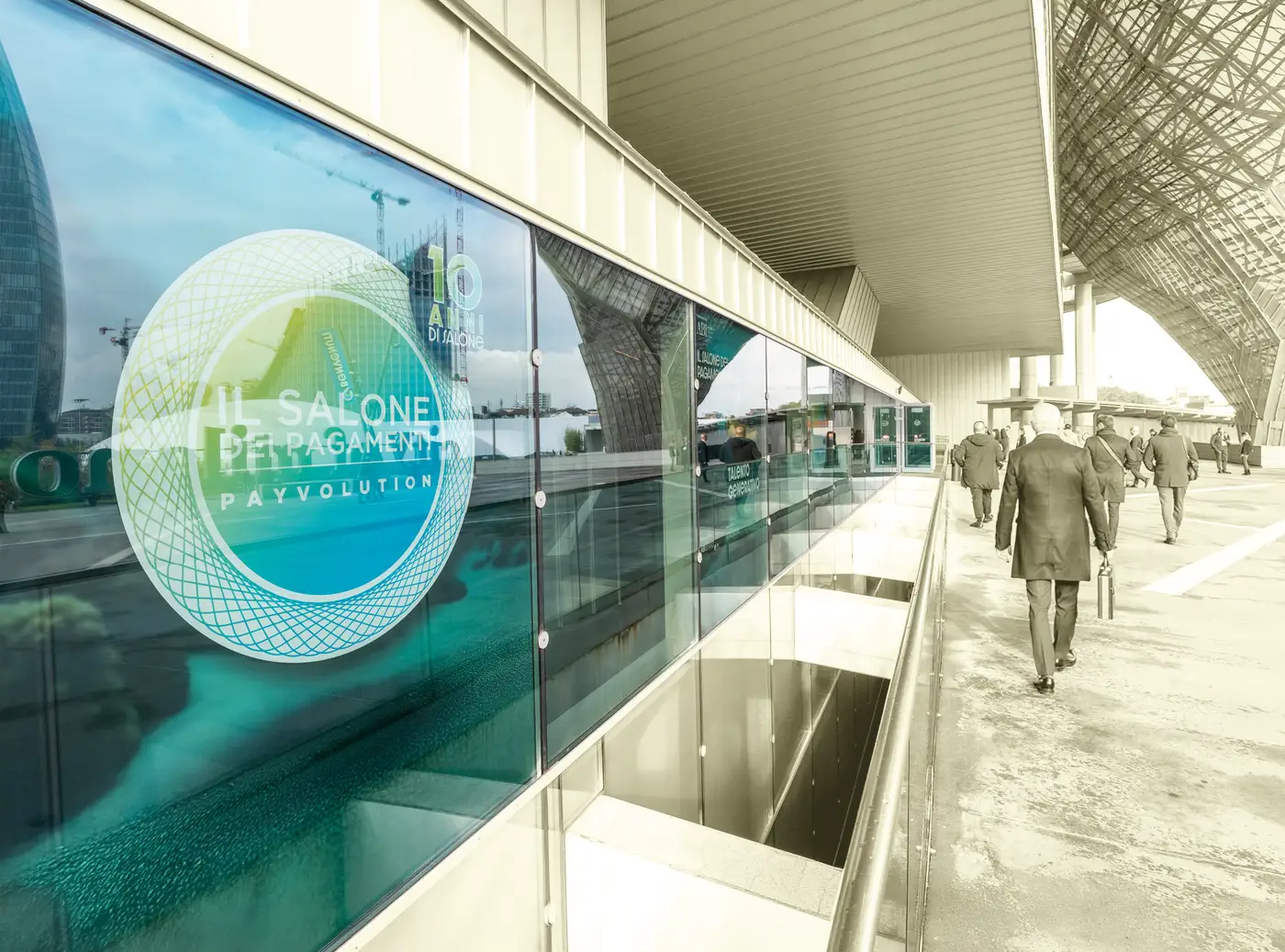
What Salone dei Pagamenti 2026 reveals about new business models, international expansion and the challenges of transforming technology into commercial value.
Financial innovation is reshaping the movement of money and influencing how companies sell, how platforms earn revenue, how businesses access financial services and how technology providers approach new markets.
A promising technology, however, still needs a viable business model to succeed commercially.
Salone dei Pagamenti 2026, taking place in Milan from 24 to 26 November, offers a useful setting in which to explore this challenge. The Italian Banking Association (ABI) promotes the event, organized by ABIServizi, bringing together financial institutions, payment providers, technology companies, fintechs and other participants in the digital economy.
This year’s theme, Payvolution People, places people at the center of technological transformation. The program covers artificial intelligence, digital currencies, payment infrastructures, security and the evolution of financial ecosystems.
Together, these subjects raise a wider business question: how can financial innovation achieve commercial adoption, support expansion into new markets and sustain growth?
Beyond the transaction: where new business models emerge
Traditionally, businesses have treated payments as a supporting function: a customer buys a product or service, and payment infrastructure completes the transaction.
The boundaries between that function and the wider commercial offering are becoming less distinct.
Digital platforms, retailers, software providers and service companies increasingly integrate payment capabilities into their core propositions, with consequences for customer retention, working capital, distribution and business economics.
Consider a software platform serving small retailers. It may begin with inventory management, sales reporting and customer administration, then integrate payment acceptance, reconciliation and potentially financing services through authorized financial partners. In doing so, the platform addresses a greater share of its customers’ day-to-day operations.
Its competitive proposition now extends from software features to the management of connected business processes.
Service fees or agreed commercial arrangements may create additional revenue, although companies must assess those returns alongside integration costs, customer support, regulatory requirements and the economics of their financial partnerships.
Marketplaces connecting buyers and sellers face similar choices, as do B2B platforms seeking simpler invoicing, collections and settlement.
The commercial value of a payment integration depends on whether it solves a significant business problem.
Embedded finance therefore has implications across the value chain for non-financial businesses, including new operational dependencies and responsibilities that require careful assessment.
At Salone dei Pagamenti, discussions of embedded finance, connected infrastructures and changing customer experiences offer a setting for examining the technology alongside its business implications.
The commercialization gap: why good technology is not enough
Fintech companies often demonstrate strong technical capabilities, from faster transaction processing and more sophisticated fraud detection to improved data analysis and integration with existing financial systems.
Even with these capabilities, commercial adoption can prove difficult.
A technically successful pilot may fail to produce a purchasing decision. Innovation teams can welcome a solution that later encounters concerns from procurement, information security, compliance or the business unit responsible for financing deployment.
Often, the value that a provider demonstrates does not fully address the practical conditions under which a customer can adopt its technology.
A bank assessing a payments solution may focus on resilience, cybersecurity, operational continuity, third-party dependencies and compatibility with existing infrastructure. A retailer may give greater weight to transaction costs, checkout conversion, settlement speed and ease of implementation.
Providers consequently need to make a commercial case that reflects the priorities of each buyer.
Three questions help clarify that case.
First, who experiences the problem, and who has the authority and budget to address it? Operational users, procurement teams and economic decision-makers may hold different responsibilities.
Second, how can the customer measure the benefit? Less manual reconciliation, fewer payment failures or better cash-flow visibility provide a clearer business case than a general promise of efficiency.
Third, what must change inside the customer’s organization? Adoption may require adjustments to processes, staff responsibilities, controls and contractual relationships.
Those changes carry implementation costs that businesses frequently underestimate.
For fintech providers, commercialization thus demands an understanding of internal decision-making, the stakeholders involved and the economic evidence needed to withstand operational scrutiny, alongside product development and marketing.
Customers, in turn, need a reliable way to assess the measurable value behind technological novelty.
A convincing proof of concept should demonstrate that the system works and establish who will use and fund it, how it will operate, and which results would justify a wider rollout.
Crossing borders: the European opportunity and its limitations
Europe gives fintech companies access to a large, interconnected economic area. Yet businesses that treat it as a commercially uniform market risk costly mistakes.
Regulatory harmonization establishes an important foundation, particularly for financial services operating under European frameworks. Across national markets, customer behavior, established payment methods, banking relationships, procurement practices and distribution structures still differ.
A payment provider with a successful domestic proposition may therefore need to adapt substantially before entering another European market.
Merchants in one country may favor established account-to-account payment solutions; elsewhere, card acceptance, mobile wallets or local banking integrations may play a larger role in the customer experience.
For B2B providers, differences in accounting processes, enterprise software and purchasing procedures can further shape demand.
Market size alone offers an incomplete basis for expansion decisions.
Companies must establish where demand exists for their solution, which customer groups they can reach commercially and whether local partners can accelerate distribution or implementation.
They also need to decide which activities to manage centrally and where to develop local capabilities. Regulatory permissions, contractual arrangements, customer support and compliance obligations may place additional constraints on the chosen business model.
Local partnerships can ease some barriers, although a solution still needs product-market fit.
Salone dei Pagamenti 2026 reflects this international dimension through initiatives such as Stay Fintech, Stay Tech, bringing together fintech companies, technology providers, investors and established financial institutions.
The commercial value of these encounters depends on whether participants can identify viable opportunities, understand prospective customers and form partnerships that support international expansion.
From introductions to partnerships that deliver
Financial technologies increasingly serve industries beyond banking, including retail, e-commerce and utilities. These applications open commercial opportunities for technology providers and create a corresponding need for partnerships with clear economic and operational foundations.
Consider a fintech offering automated payment reconciliation to a commercial platform. The fintech supplies the technology, and the platform manages customer relationships and operational data. Before signing an agreement, both parties need to clarify responsibility for integration, customer support, regulatory obligations and implementation costs, together with the allocation of revenue.
The choice of commercial structure also matters. Referral agreements, distribution partnerships and jointly developed products call for different levels of investment, risk and commitment, so the most suitable arrangement depends on each participant’s objectives and capabilities.
Effective business development begins with identifying the capabilities required to enter a market or reach a particular customer segment, giving introductions a clear commercial purpose.
Some introductions will reveal a mismatch. Recognizing it early can prevent unnecessary investment and help companies focus their resources on more promising opportunities.
The next decisions: infrastructure, AI and economic responsibility
Several developments on the Salone’s agenda may influence these commercial decisions.
Instant payments, for example, can change how companies manage liquidity and settlement. Their economic value depends on whether faster access to funds improves operations enough to justify implementation and the necessary controls.
The digital euro raises questions about future payment infrastructure, intermediaries and potential uses. Businesses need to distinguish proposals under discussion from capabilities they can already deploy commercially.
Artificial intelligence adds another consideration.
As AI systems move from retrieving information towards supporting or initiating purchases, businesses will need clear rules for purchasing authority, transaction limits, authentication and accountability.
An automated purchasing agent could identify suppliers, compare prices and initiate transactions within predefined parameters, potentially reducing administrative work in some procurement activities.
The arrangement raises practical questions: who sets those parameters, what happens if the agent selects an unsuitable supplier or exceeds its budget, and how can the organization confirm that it authorized the transaction?
The answers affect commercial risk, governance and customers’ willingness to adopt automated services.
Their significance will vary with the transaction, the industry and the level of autonomy involved.
Decision-makers therefore need to assess which applications provide enough operational or commercial benefit to warrant their cost, controls and associated responsibilities.
Milan as a starting point, not a destination
Salone dei Pagamenti 2026 brings together payment infrastructures, financial technology, artificial intelligence, customer experience, security and international business development—fields that organizations frequently examine separately.
As these areas converge, companies face decisions that span several disciplines.
A fintech entering a new market needs expertise in both technology and distribution. A retailer integrating financial services must understand customer experience and operational responsibility, and a bank working with a technology provider must connect innovation to procurement, governance and measurable business outcomes.
The event’s emphasis on people fits this reality: individuals and organizations assess the options, negotiate responsibilities and commit the resources that turn proposals into action.
Progress also calls for measures that extend beyond demonstrations and the number of business contacts established.
Companies attending the Salone could begin with three questions: which customer problem warrants investment, what capabilities or partnerships will bring the solution to market, and how will they measure commercial success after implementation?
Each organization will reach different answers, shaped by its customers, capabilities and market conditions.
Assessing the future of payments consequently requires attention to the commercial decisions surrounding technological progress.
The decisive challenge lies in developing business models that customers adopt, companies can sustain and markets are prepared to support.
Salone dei Pagamenti creates opportunities to explore those possibilities. The next stage depends on the decisions organizations make after the event.
Join the discussion at Salone dei Pagamenti 2026, taking place in Milan from November 24 to 26.
Discover the 2026 program and register to attend.
Key References
Salone dei Pagamenti 2026 — Official Program
Stay Fintech, Stay Tech — Official Program
Bancaforte — Salone dei Pagamenti 2026: innovazione al servizio del valore umano
Bancaforte — Stay Fintech, Stay Tech: Il Salone è un palcoscenico internazionale per il fintech