

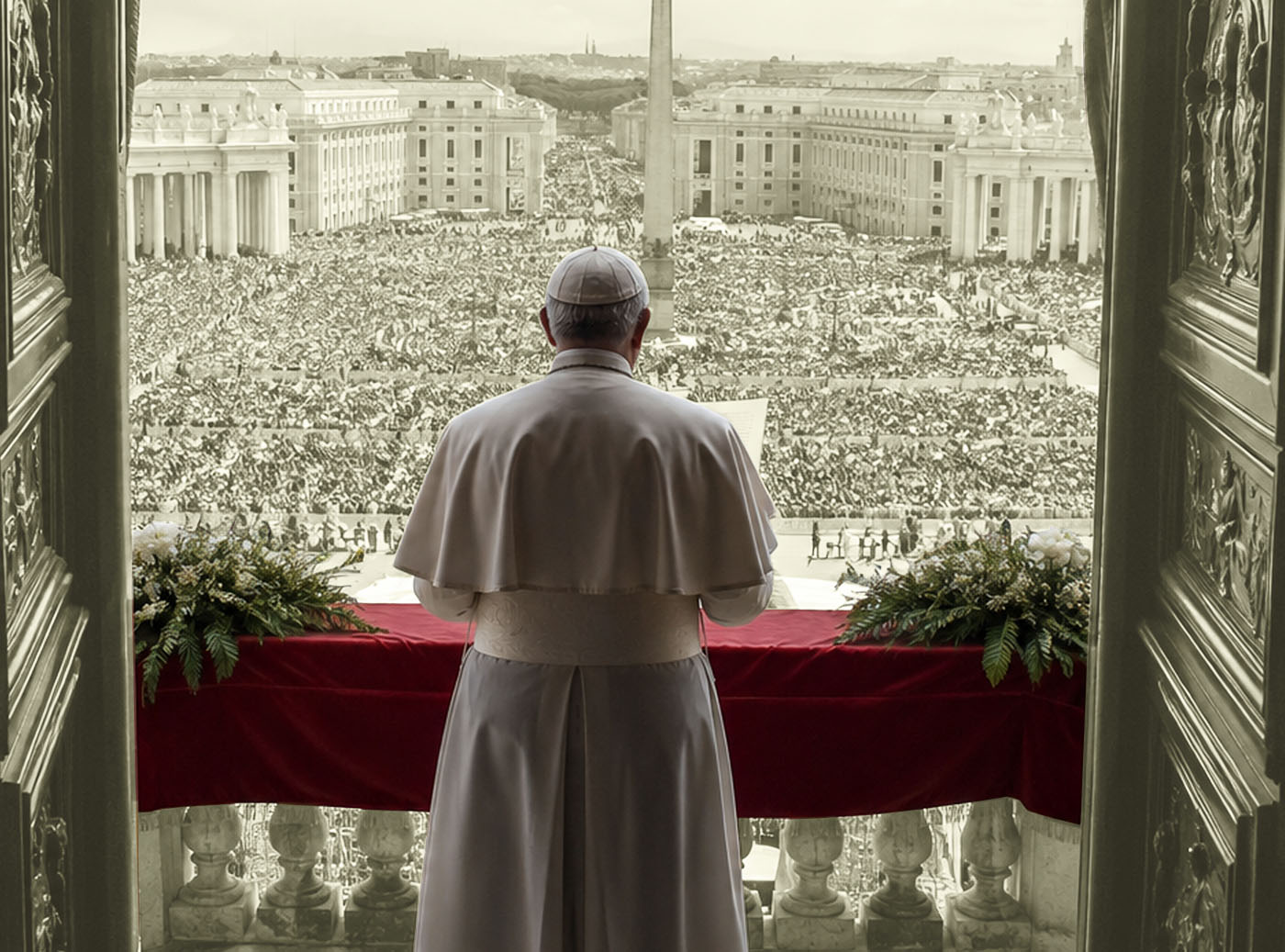
A new encyclical rarely registers in boardrooms or policy labs. Yet Magnifica humanitas, issued by the Pope in 2026, deserves careful attention from business leaders and AI decision-makers. Not because it offers technical guidance on machine learning, but because it addresses a deeper question that regulation alone cannot answer: what vision of the human person is being embedded in our digital systems?
The timing is not accidental. AI is no longer an experimental technology. It shapes credit allocation, hiring, public services, reputation systems and military capabilities. It structures markets and influences democratic processes. Governance discussions have accelerated globally, from AI Acts to safety summits and corporate “responsible AI” frameworks. But as the encyclical argues, the risk is that power expands faster than our moral and institutional capacity to guide it.
The technocratic temptation
At the heart of the document lies a critique of what it calls the “technocratic paradigm”: the tendency to let efficiency, optimization and control become the default logic of social organization . AI amplifies this paradigm. Systems trained to optimize measurable outputs inevitably privilege what can be quantified.
For executives, this logic is familiar. Algorithms increase efficiency, reduce uncertainty and improve margins. Yet the encyclical warns that when efficiency becomes the ultimate criterion, human beings risk being evaluated primarily by outcomes and productivity.
This is not a religious objection to technology. It is a governance insight. Every AI system embodies choices: what to measure, what to ignore, which risks to tolerate, whose data to prioritize. Technical design decisions encode anthropological assumptions. If those assumptions remain unexamined, governance frameworks become procedural shells around deeper moral defaults.
More power does not necessarily imply something better.
Concentrated digital power
One of the most striking sections of the encyclical addresses the concentration of digital power. Control over platforms, infrastructure, data and computing resources increasingly rests with major economic actors rather than states.
For business leaders, this concentration creates both advantage and exposure. Scale enables innovation. But opacity erodes trust. When algorithmic decision-making affects employment, credit or public services, responsibility cannot dissolve into technical complexity. The document insists that AI is never morally neutral.
This claim has direct governance implications. “Alignment” debates often focus on aligning AI systems with abstract human values. The encyclical goes further: who defines those values, and under what accountability? A more “moral” AI is insufficient if the moral framework itself is controlled by a narrow set of actors.
Beyond regulation
Regulatory frameworks are necessary. The text explicitly calls for robust legal structures, independent oversight and political responsibility . Yet it also argues that regulation alone cannot resolve the imbalance between technological acceleration and institutional adaptation.
This is where the encyclical speaks most directly to senior leaders. AI governance is not only about compliance with external rules. It is about internal moral architecture. Slowing deployment in certain contexts, demanding explainability, or refusing certain applications are not anti-innovation moves. They are exercises of prudence.
In corporate settings, this translates into board-level responsibility. AI strategy should not be delegated solely to technical teams. Ethical review cannot be an afterthought. The design phase itself must reflect social justice, transparency and human oversight.
It is not enough to invoke ethics in the abstract
The illusion of neutrality
The document highlights a subtle risk: when AI systems present themselves as objective, they can cloak embedded biases and exclusions . Delegating decisions to algorithms may reduce visible human prejudice, but it can also obscure accountability.
For policymakers, this challenges the narrative that automation equals fairness. For corporate leaders, it underscores litigation, reputational and societal risk. If an algorithm defines who is “creditworthy” or “employable,” the organization must remain accountable for that judgment.
More profoundly, the encyclical questions whether a society that delegates critical judgments to systems incapable of compassion risks eroding its own moral sensibilities. Machines do not forgive. They do not recognize transformation. Over-reliance on statistical classification may narrow our collective imagination about human potential.
The deeper cultural narrative
Perhaps the most strategic insight appears in its engagement with transhumanist and posthumanist currents . These narratives, influential in parts of the technology ecosystem, frame progress as overcoming or redesigning the human condition.
The encyclical does not reject enhancement technologies outright. It questions the underlying aspiration to surpass vulnerability, finitude and relational dependence. When limits are seen only as defects to be corrected, society may begin to classify certain lives as less efficient, less desirable or less worthy.
For leaders, this is not an abstract philosophical dispute. Investment flows, product roadmaps and research agendas are shaped by implicit visions of what counts as improvement. If the ultimate goal is optimization without regard for relational and social consequences, AI systems may intensify inequality and exclusion.
Human dignity as governance principle
Throughout the text runs a consistent thread: human dignity is not a rhetorical add-on but a governance criterion. It demands clarity of responsibility, meaningful participation, protection of the vulnerable and equitable access to technological benefits.
This reframes AI governance from a compliance checklist to a question of institutional character. Does the deployment of AI make life “more human,” to borrow the document’s formulation ? Does it strengthen relationships, widen opportunity and reinforce justice? Or does it centralize power and reduce persons to data points?
Why the Pope’s voice matters
Why should business leaders care that the Pope has entered this debate? Because long-standing moral institutions operate on a different time horizon. They are less concerned with quarterly performance and more with civilizational trajectory.
By invoking images of Babel and the rebuilding of Jerusalem , the encyclical frames AI as a construction project. The question is not whether we build, but what we are building and for whom.
In an era where AI development is often described as an arms race, the call to “disarm” AI from competitive domination introduces an uncomfortable but necessary challenge. Technological supremacy does not automatically confer moral legitimacy.
For secular leaders, the significance lies not in theological claims, but in the insistence that governance must integrate anthropology, ethics and political responsibility. Regulation can constrain behavior. Only moral depth can shape intention.
The measure of progress
Ultimately, the encyclical proposes a demanding test: progress is measured not by technical capability alone, but by the care a civilization can offer and by its capacity to recognize each person as more than a function.
In boardrooms and ministries, this translates into concrete questions. Where should we draw boundaries? Who bears accountability? How do we ensure that data and computational power do not silently redefine human worth?
AI governance beyond regulation requires leaders who are willing to interrogate the narratives driving their own strategies. The Pope’s intervention is a reminder that technological systems are never only technical. They are moral environments.
The real debate is not between optimism and fear. It is between two visions of progress: one that treats humanity as raw material for optimization, and one that treats technology as a tool in service of human flourishing. The future of AI will be shaped by which vision leaders choose to embed in code, contracts and institutions.
To disarm does not mean rejecting technology, but preventing it from dominating humanity